

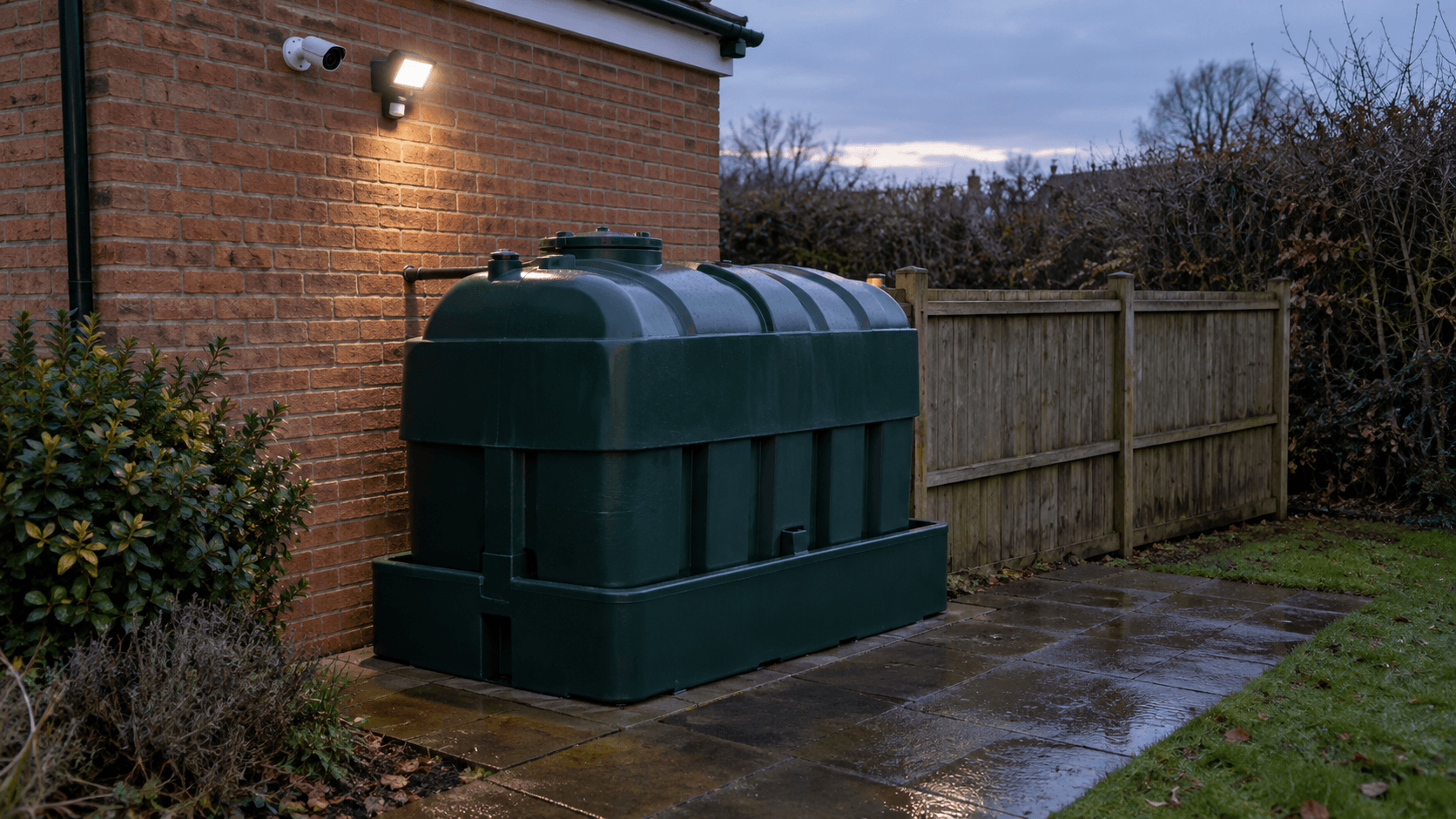
Protect a heating oil tank with several layers: a CCTV camera covering the tank and access track, an oil level alarm that alerts you to a sudden drop, motion-activated lighting, and a closed-shackle padlock on the inspection cap. Never lock or block the vent. Keep the tank visible from the house but screened from the road.
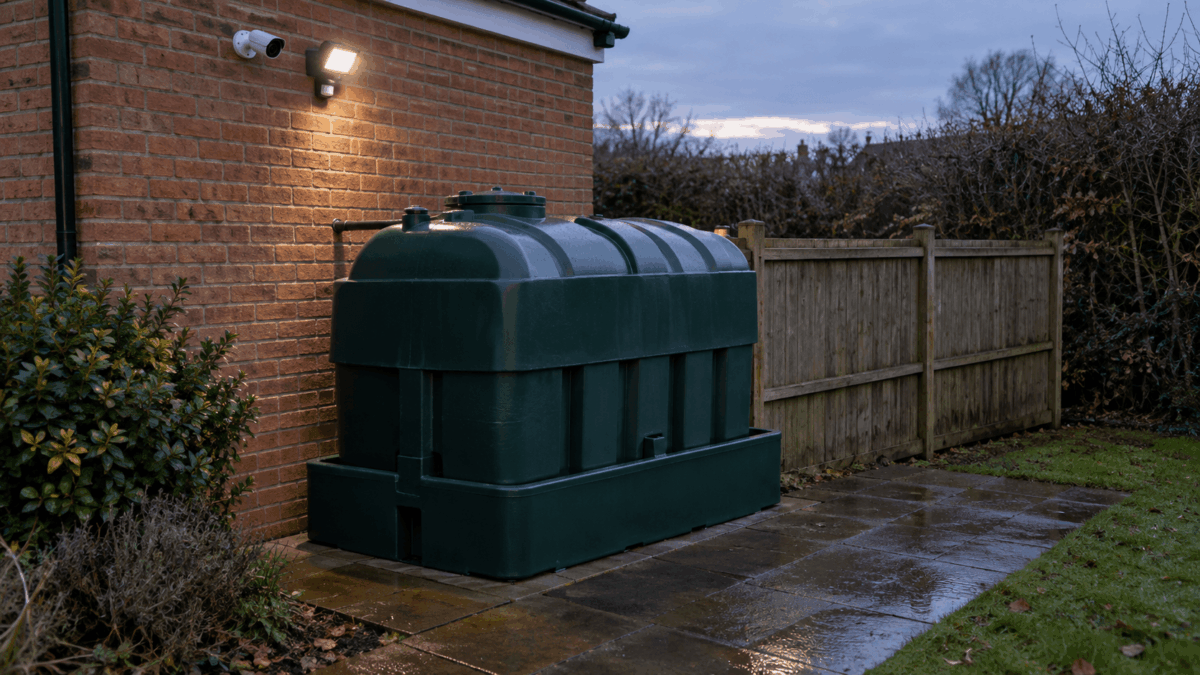
If your home runs on heating oil, your tank could be holding several hundred pounds’ worth of fuel, sitting in the garden with nothing but a basic lid between it and a thief. And when oil prices rise and the nights get longer, thieves notice.
Around 1.5 million UK households rely on heating oil, most of them in rural areas off the gas network, and a 500-litre top-up can cost well over £500.
Police forces across the UK have issued fresh warnings this year. In March 2026, Hampshire and Isle of Wight Constabulary warned that criminals “will watch the market and take the opportunity to profit” from rising oil costs. The same risk applies to red diesel on farms.
The good news is that oil theft is usually opportunistic, and a few layers of protection make your tank a much less attractive target. Here’s how to protect it, based on police and OFTEC (the oil heating industry body) guidance, and what our engineers see on rural installations.
Why oil tanks are targeted
- The fuel is valuable and easy to sell. A full domestic tank can hold over 1,000 litres.
- Tanks are often out of sight. Many are tucked behind the house, a garage or a hedge, and some are right by a lane or field.
- Theft is quick. Thieves can siphon or pump a tank in minutes, often at night.
- You may not notice straight away. Many people only discover the theft when the heating cuts out, sometimes days later.
Rural homes, farms, stables and holiday lets are at most risk, particularly those some distance from neighbours. If you worry about rural crime in general, our guide Should You Worry About Crime in the Countryside? explains the wider picture.
How to protect your heating oil tank
Police and OFTEC guidance points to the same approach: make the tank harder to reach, harder to empty unseen, and quicker to alert you if someone tries.
1. Make it visible from the house, but hidden from the road
A tank you can see from your windows is a tank thieves feel watched at. At the same time, screen it from the road or public footpaths with a fence, trellis or planting, so passers-by don’t know it’s there. Always leave clear access for deliveries and servicing, and follow fire safety rules for tank positioning.
2. Point a CCTV camera at the tank
Both police and OFTEC recommend CCTV. A visible camera deters thieves, and clear footage of a vehicle or person gives police something to work with. For oil tanks, look for:
- A clear view of the tank and fill point, not just a wide shot of the garden
- Good night vision, as most thefts happen after dark. See night vision CCTV: what you actually get
- A camera covering the driveway or access track, so any vehicle arriving is recorded
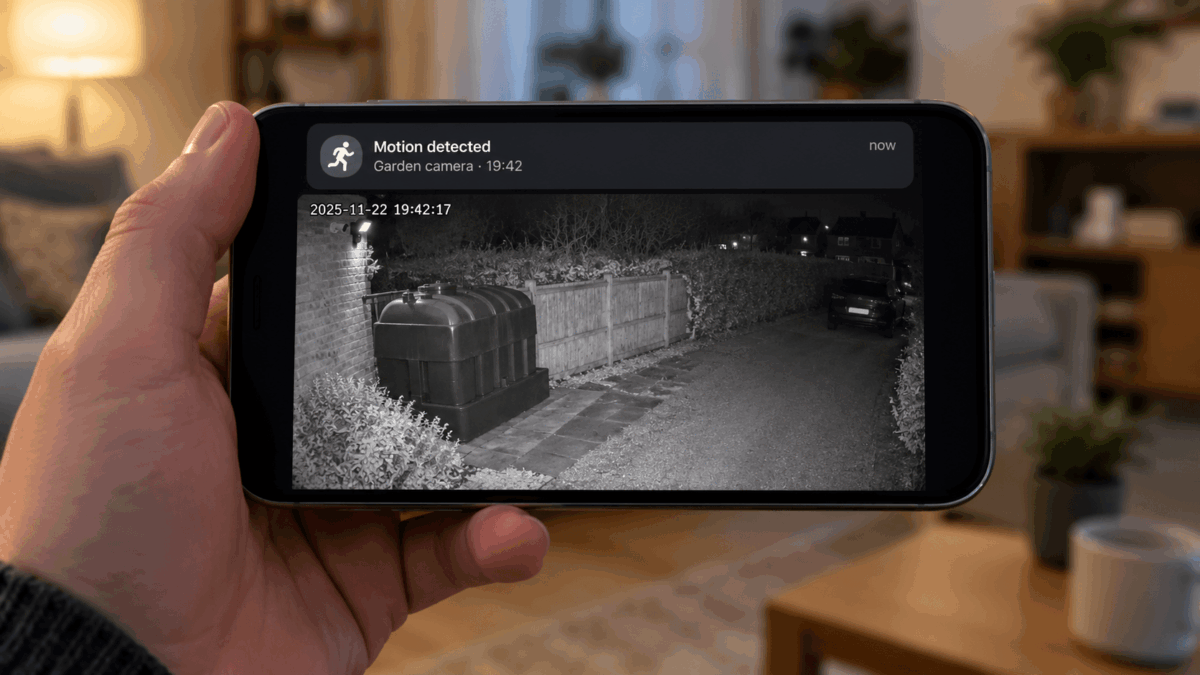
- Motion alerts to your phone, so you know as soon as someone is near the tank
If the tank is a long way from the house, running a cable may not be practical. A solar or 4G camera can cover remote tanks and outbuildings with no mains power or Wi-Fi. For the most reliable coverage near the house, a wired system is best. See why installers recommend wired PoE.
3. Fit an oil tank alarm
An oil tank alarm, or electronic level gauge, alerts you when the oil level drops suddenly. Some sound a siren at the tank, and others send an alert to your phone. It’s one of the quickest ways to know you’ve been targeted, often while it’s still happening. Oil level monitors are usually available from heating oil suppliers and tank specialists. For the wider security around your tank, such as CCTV, alarms and lighting, our team is happy to help.
4. Add motion-activated lighting
OFTEC notes that motion-activated lighting “will startle potential thieves”. Use it alongside CCTV so the camera gets a clearer picture. Our home security lighting page shows the options.
5. Lock the lid, not the vent
Most tanks have an inspection cap with a padlock eyelet. Use a closed-shackle padlock rated to Sold Secure or Secured by Design standards, which is much harder to cut. Never lock or block the tank’s vent. A locking fuel cap or anti-siphon device adds another layer.
6. Put up warning signs
Signs showing that CCTV and alarms are in use are a cheap, effective deterrent. See our guide to using CCTV signs effectively.
7. Check your levels regularly
Get into the habit of checking your oil level, especially after a few days away. Look for spilt fuel, marks around the lid or damage to the fence nearby.
8. Talk to your neighbours
In rural areas, neighbours looking out for each other makes a real difference. Report suspicious vehicles to the police, and consider joining or setting up a local watch scheme.
Protect your oil tank, yard and outbuildings. Our local engineers fit CCTV for rural homes, farms and stables, covering tanks, gates, access tracks and outbuildings. We’ll recommend wired, solar or 4G cameras depending on your site, and set up alerts on your phone.
Get your free quote within 24 hours or call 0800 211 8310.
What about farms and red diesel?
Farm diesel tanks and bowsers face the same risk, often on a larger scale. Police advice includes:
- Keeping tanks close to the farmhouse, where they can be seen
- Covering isolated tanks with CCTV
- Checking levels regularly
- Using mobile, lockable bowsers where possible, rather than permanent tanks in remote spots
Our farm CCTV systems are designed to cover large, open sites, including yards, fuel stores, machinery sheds and entrances. See how we tackled a rural security problem in our Coventry rural CCTV case study.
Keeping your footage legal
If your camera covers a lane, public footpath or a neighbour’s land, data protection rules apply. Our guide to the legal requirements for home CCTV explains what you need to know, and our engineers can set up privacy masking so you only record your own property.
Protect the rest of your property too
Oil tanks are just one of many outdoor targets. Thefts from outside UK homes rose by 21% last year. See our guide to protecting sheds, gardens and driveways, and our garden, garage and driveway CCTV pages.
Speak to a CCTV.co.uk engineer
Every property is different, and a rural site with a long drive, outbuildings and an oil tank needs careful planning. Our engineers offer a free site survey and professional CCTV installation across the UK, with remote monitoring available if you want someone watching when you can’t.
Request your free quote or call us free on 0800 211 8310.

Frequently asked questions
How do I stop someone stealing my heating oil?
Use several layers of protection: CCTV covering the tank and driveway, an oil tank alarm, motion lighting, a quality padlock on the inspection cap, and screening the tank from the road.
Does CCTV stop oil theft?
A visible camera is a strong deterrent, and footage of a person or vehicle gives police evidence to work with. It works best alongside an alarm and lighting.
What is an oil tank alarm?
An oil tank alarm, or electronic level gauge, alerts you when the oil level drops suddenly, which can be a sign of theft or a leak.
Can I put a padlock on my oil tank?
Yes, on the inspection cap. Use a closed-shackle padlock to Sold Secure or Secured by Design standards. Never lock or block the tank’s vent.
What CCTV is best for a remote oil tank?
If the tank is near the house, a wired camera is most reliable. For tanks a long way from power or Wi-Fi, a solar or 4G camera can work well.
