

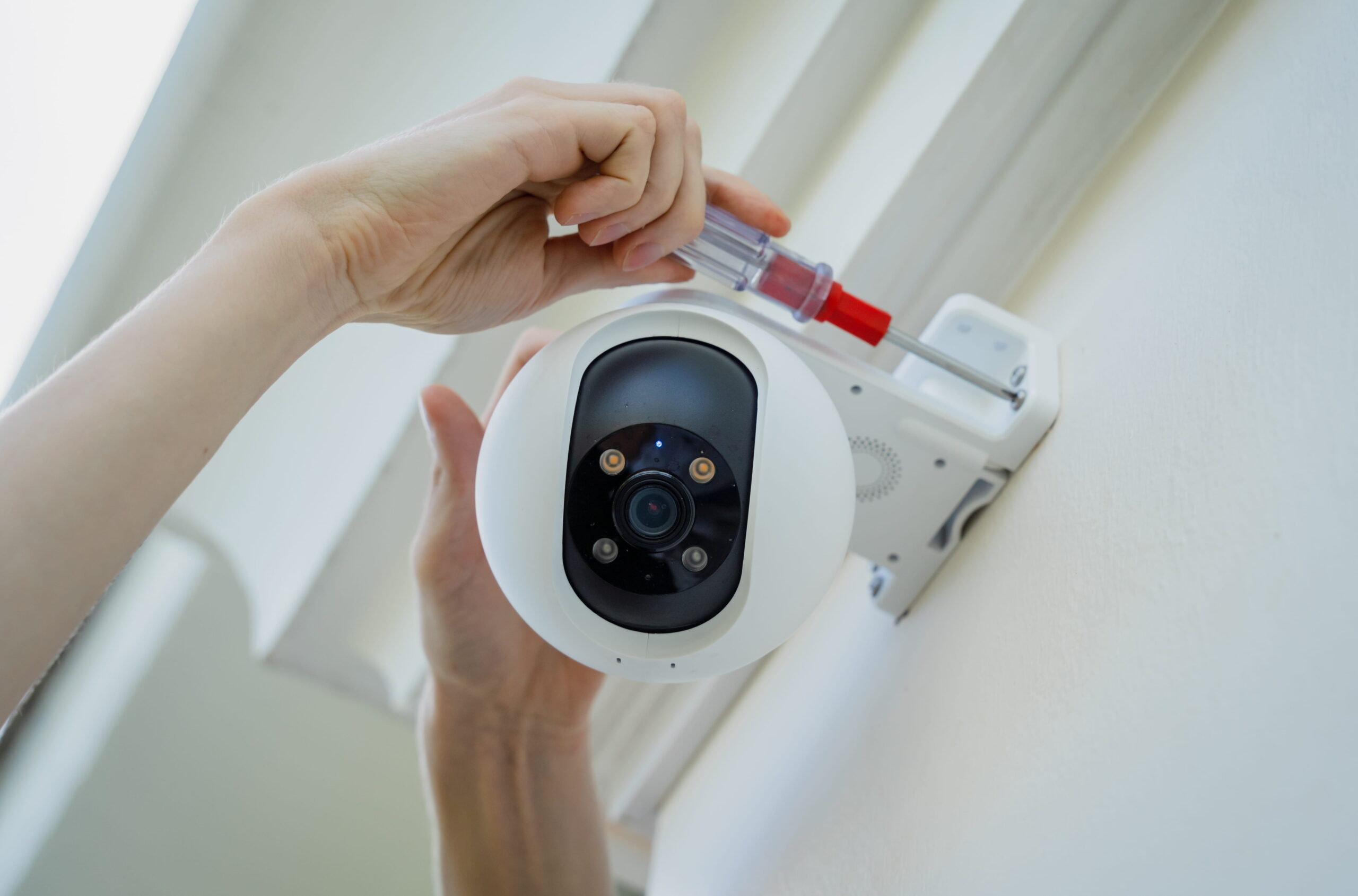
Solar and 4G security cameras are one of the fastest-growing corners of home security. Searches for solar security cameras have risen more than tenfold in the past year, and it’s easy to see why. They promise cameras with no cables to run, no plug sockets to find and, with 4G, no Wi-Fi to worry about.
But a British winter is a tough test for any camera that relies on sunlight and a battery. Days are short, skies are grey, and temperatures drop below freezing. So do solar and 4G cameras keep working from November to February, and when are they the right choice? Here’s what our engineers see on real installations.
How solar and 4G cameras work
Solar cameras are battery-powered cameras with a small solar panel, either built in or mounted separately and connected by a short lead. The panel tops up the battery during daylight, so in theory you never need to take the camera down to charge it.
4G cameras use a SIM card and the mobile network instead of your home Wi-Fi to send alerts and live video to your phone. Most 4G cameras are also battery- and solar-powered, which means they can run somewhere with no mains power and no broadband at all.
Many of the brands we install offer both, including Reolink, Eufy and Ring.
The winter problem: less light, colder batteries
A solar camera only works well if the panel collects more energy than the camera uses. In summer that’s easy. In winter, three things work against it.
1. Short, grey days
In December, much of the UK gets less than eight hours of daylight, and much of that is overcast. Less light means less charge, so a camera that stayed fully charged in July can slowly drain over a run of dull weeks.
2. Cold weather and batteries
Lithium batteries don’t like the cold. In freezing conditions they hold less charge, and many charge more slowly, or pause charging completely, until they warm up. A camera on a north-facing wall in a frost pocket will feel this most.
3. More activity to record
Longer nights mean more hours of night-vision recording. Wind, rain and moving branches can trigger more motion alerts. Every clip uses battery.
So do they work in winter?
Yes, if they’re set up properly. The solar cameras we see struggling in winter usually have one of these problems:
- The panel is in the wrong place. Panels need direct light, ideally facing south with no shade from trees, gutters or buildings. A panel tucked under an overhang may never get direct sun between November and February.
- The panel is dirty. Leaves, bird droppings and grime can cut output noticeably. A quick wipe in autumn helps.
- Motion settings are too sensitive. A camera recording every passing car or swaying hedge drains its battery fast. Tighter motion zones and person detection make a big difference. Our guide to how motion detection really works explains the settings.
- The camera is doing too much. Long clip lengths, constant live viewing and maximum resolution all use more power.
Set up well, a good solar camera can stay charged all year in most parts of the UK. It’s also worth knowing when a wired camera is simply the better choice.
When 4G makes sense
4G cameras solve a different problem: no Wi-Fi. They’re a good fit for:
- Allotments, stables and paddocks a long way from the house
- Holiday homes and empty properties where the broadband is switched off
- Building sites and yards before a phone line is installed
- Rural properties where the Wi-Fi doesn’t reach the outbuildings
There are a few things to check first:
- Signal strength. A 4G camera is only as good as the mobile signal where it’s mounted. Check signal at the actual camera position, not just at the gate.
- Data plan. Live viewing and video clips use data. A plan that’s too small can run out halfway through the month.
- Storage. Most 4G cameras save clips to a memory card, the cloud or both. Our guide to cloud vs local CCTV storage explains the pros and cons.
If you’re not sure whether you need 4G at all, our guide Can CCTV Work Without WiFi? covers the other options.
Solar and 4G vs wired CCTV
| Solar / 4G camera | Wired (PoE) camera | |
| Power | Battery topped up by solar | Constant power through one cable |
| Winter performance | Depends on panel position and light | Unaffected by weather or daylight |
| Recording | Usually motion-triggered clips | Can record 24/7 |
| Connection | Wi-Fi or 4G mobile signal | Wired network connection |
| Best for | Hard-to-reach spots with no power or broadband | Main entrances, driveways and anywhere you need footage around the clock |
For the front door, driveway and back of the house, a wired system is usually more reliable, especially if you want continuous recording. Our guide to why installers recommend wired PoE cameras explains why. Many homes end up with a mix: wired cameras on the house, and solar or 4G cameras for the shed, gate or outbuildings.
Already bought a solar or 4G camera online? Our engineers install customer-supplied solar, battery and 4G cameras, including Reolink and Eufy. We’ll find the best position for the panel, check the signal, set up motion zones and get the app working before we leave. Reolink installations start from £199 for two cameras.
Get your free quote within 24 hours or call 0800 211 8310.
Getting the best from your solar camera this winter
- Mount the panel facing south with a clear view of the sky, even if the camera itself faces another way.
- Keep the panel clean, especially after leaf fall.
- Narrow your motion zones so the camera ignores roads, trees and next door’s garden.
- Use person or vehicle detection if your camera has it.
- Check the battery level in the app every week or two through the darkest months.
- Consider a second panel or a larger battery if the camera is in a shady spot.
- Make sure the camera only covers your property. If it records beyond your boundary, data protection rules apply. See our guide to the legal requirements for home CCTV.
Protecting the rest of your property
Solar and 4G cameras are often bought to protect sheds, gardens and outbuildings, where theft is rising fast. Our guide to protecting sheds, gardens and driveways explains the risks, and our garden CCTV, garage CCTV and driveway CCTV pages show how we cover each area. If you live somewhere rural with an oil tank, see our guide to preventing heating oil theft.

Talk to a CCTV.co.uk engineer
Whether you want a solar camera fitted properly, a 4G camera for a site with no broadband, or a full wired system for your home, our local engineers can help. We offer professional CCTV installation across the UK, as well as an install-only service for cameras you’ve already bought.
Request your free quote or call us free on 0800 211 8310.
Frequently asked questions
Do solar security cameras work in winter?
Yes, if the panel gets direct light and the camera’s settings aren’t draining the battery too fast. In the darkest months, some cameras in shady spots may need an occasional top-up charge or an extra panel.
How many hours of sun does a solar camera need?
It varies by model, but most need a few hours of direct light each day to stay charged. Overcast days produce much less charge than sunny ones.
Do 4G cameras need Wi-Fi?
No. 4G cameras use a SIM card and the mobile network, so they work where there’s no broadband. They do need a decent mobile signal and a suitable data plan.
Can solar cameras record 24/7?
Most solar cameras record short clips when they detect motion, to save battery. For continuous recording, a wired camera connected to a recorder is the better option.
Can you install a solar camera I’ve already bought?
Yes. We install customer-supplied solar, battery, 4G and wired cameras from brands including Reolink, Eufy and Ring.
