

Table of Contents
| Section | What You’ll Learn |
|---|---|
| What Actually Happens When Summer Sun Damages Your Cameras | How prolonged solar exposure causes permanent sensor damage and housing deterioration in CCTV systems. |
| Where Summer Sun Exposure Causes the Most Damage | The highest-risk camera positions and why south and west-facing installations are most vulnerable. |
| The Thermal Reality Most Installers Ignore | Why standard residential cameras struggle with prolonged heat and direct sunlight exposure. |
| Why Summer Damage Matters to Your Home Security | How solar damage impacts footage quality, warranties, insurance evidence and long-term reliability. |
| Why Solar Exposure Gets Ignored During Installation | Why many installers overlook solar positioning risks during site surveys and installations. |
| The Commercial Versus Residential Knowledge Gap | How commercial CCTV standards differ from many residential installation practices. |
| How to Assess Your Solar Exposure Risk Right Now | Practical ways to identify whether your existing CCTV cameras are vulnerable to summer sun damage. |
| The DIY Assessment Test | A simple step-by-step method homeowners can use to check camera exposure levels. |
| How Professional Installation Protects Against Solar Damage | How professional site surveys and positioning strategies help protect CCTV systems year-round. |
| Taking Action Before Summer Arrives | Why May is the ideal time to assess and reposition vulnerable cameras before permanent damage occurs. |
| What Clear Footage Actually Requires | Why reliable CCTV footage depends on year-round environmental planning and correct installation. |
| Your Next Steps for Solar-Protected Home Security | How homeowners can assess current systems and plan for long-term CCTV durability. |
But there’s a hidden threat that most installers won’t mention during your site visit: the UK summer sun between June and August causes more permanent CCTV damage than autumn rain and winter frost combined. The problem? Around 80% of residential installers position cameras based on convenient mounting points rather than conducting proper solar exposure analysis. Homeowners typically discover this issue in September, when footage develops permanent bright spots and washed-out areas that make identification impossible, exactly when they need clear evidence most.
If you’re reading this in May 2026, you’re in the final window to assess and reposition vulnerable cameras before the intense summer sun causes costly damage. This isn’t about weather resistance or waterproofing. It’s about permanent sensor degradation that renders your investment useless and isn’t covered by warranty.
What Actually Happens When Summer Sun Damages Your Cameras
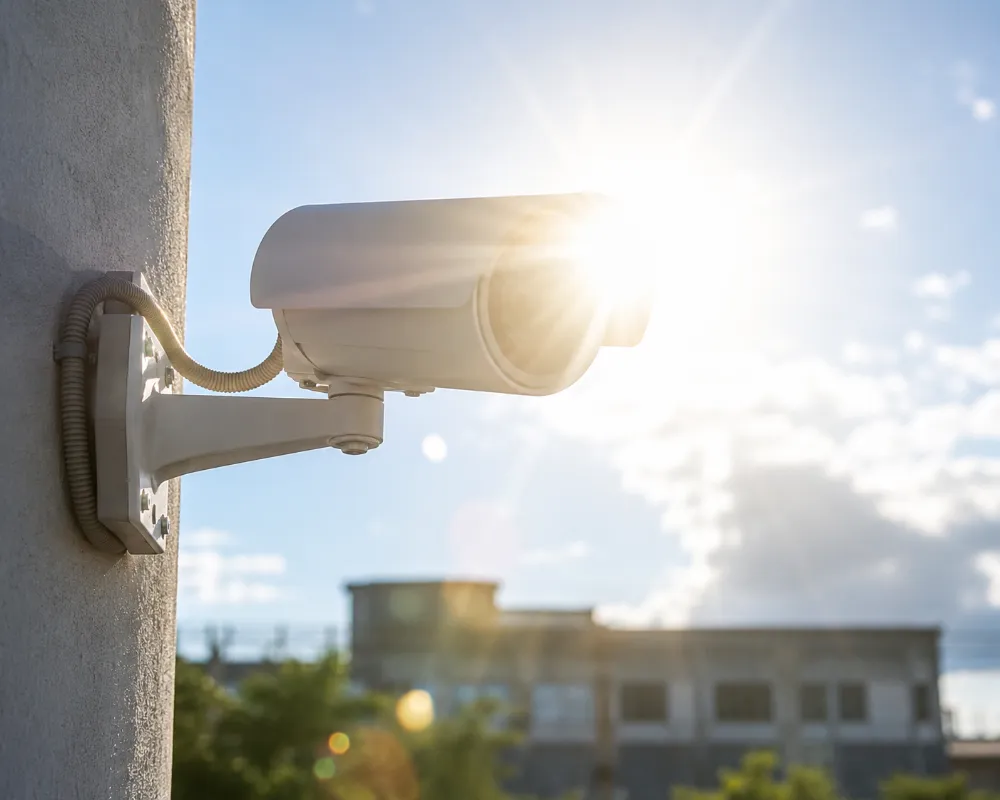
Solar damage to CCTV for home systems occurs when intense direct sunlight strikes the camera sensor, causing permanent pixel degradation. This is displayed as bright spots, purple halos, or completely washed-out sections in your footage. Unlike temporary lens flare that disappears when lighting conditions change, sensor damage represents permanent physical deterioration of the imaging chip itself.
The camera housing faces its own set of problems. Sustained high temperatures cause cracked plastic casings, failed seals that allow moisture ingress, and degraded internal components. When housing temperatures exceed the design specifications (typically 50°C maximum for residential cameras), the damage accumulates day after day throughout June, July, and August.
Here’s what catches homeowners off guard: both forms of damage void your warranties. Manufacturers and installers classify environmental damage resulting from improper positioning as an installation error, not equipment failure. You’re left covering the full replacement cost for cameras that may be less than two years old.
The deterioration isn’t immediate or obvious. Your footage looks acceptable in April. By late August, after three months of cumulative exposure, you notice bright patches where faces should be clearly visible. By September, identification becomes impossible in the affected areas. The damage is done, and replacement is your only option.
Where Summer Sun Exposure Causes the Most Damage
South-facing cameras mounted under soffit without recessed positioning receive eight to twelve hours of direct sun exposure during June and July. Housing temperatures reach 65-70°C, far exceeding the 50°C maximum rating for standard residential cameras. The prolonged exposure doesn’t just risk damage. It guarantees it.
West-facing cameras present a deceptive problem. They capture beautiful evening light during installation demonstrations, which is why many homeowners approve the positioning. What they don’t see in winter or on overcast days is that these cameras face directly into the setting sun between May and August. The intense low-angle sunlight floods the sensor with light that causes cumulative degradation over the summer months.
Reflected solar radiation creates secondary exposure that most installers never account for. Cameras positioned above light-coloured walls, rendered surfaces, or near windows receive bounced sunlight that compounds the direct exposure. A camera might not face the sun directly, but the reflected heat and light from a white wall beneath it can push temperatures well into the danger zone.
Door cameras face a particular challenge. Mounted to capture clear footage of visitors, they’re typically positioned to face driveways or front paths. Depending on your property’s orientation, this often means looking directly at morning or evening sun. The installer prioritises visitor identification over sensor protection because that’s what the demonstration focuses on. Nobody thinks about July conditions during a February site visit.
The Thermal Reality Most Installers Ignore
Standard residential camera housing isn’t designed for sustained direct sunlight. Commercial-grade equipment includes enhanced heat dissipation and higher-rated components, but most home installations use consumer-grade cameras to meet typical budgets. These cameras perform brilliantly in temperate conditions. They fail predictably under sustained solar exposure.
Internal temperatures don’t just match external housing temperatures. They exceed them. A black camera housing in direct sunlight can reach 70°C externally. Internal sensor temperatures may climb to 80°C or higher. At these temperatures, the adhesives holding lens elements degrade, seals fail, and the sensor itself experiences accelerated wear that causes permanent pixel damage.
Why Summer Damage Matters to Your Home Security
Permanent sensor damage means replacing the entire camera at your cost. Environmental damage falls outside equipment warranties because it results from installation positioning choices, not manufacturing defects. A £200 camera becomes a £200 loss, plus the cost of labour to remove it and install a replacement in a better position.
The gradual nature of the damage works against you. Footage quality declines slowly over two to three months of exposure. You don’t notice the slight degradation from week to week. By the time the bright spots and washed-out sections become obvious, you’ve missed the opportunity to reposition cameras before permanent deterioration occurs. The summer is over, the damage is done, and you’re facing replacement costs.
Timing matters enormously. Summer damage emerges during the exact period when burglary risk peaks and you’re most dependent on your cameras. You’ve gone on holiday, relying on your CCTV system to monitor an empty home. You return to find an incident occurred, but the footage is evidentially useless because the affected areas show nothing but bright glare where an intruder’s face should be clearly visible.
Housing failures admit moisture that corrodes electronics, causing complete system failures. A cracked housing seal doesn’t just let in rainwater during autumn storms. It allows condensation to form inside the camera, corroding circuit boards and connections. You face emergency replacement during peak installation season in September and October, when prices are highest and lead times stretch to several weeks. Your home security depends on cameras that no longer function.
Why Solar Exposure Gets Ignored During Installation
Most CCTV installers come from electrical or burglar alarm backgrounds. Direct sunlight simply isn’t relevant to their core products. Wiring, sensors, and control panels aren’t affected by solar exposure, so they never develop solar-aware positioning habits. When they transition to installing cameras, they apply the same mounting logic: find a suitable fixing point, ensure good cable routing, and position for the required coverage. Solar exposure doesn’t factor into their thinking because it never has before.
Your site survey and demonstration typically occur on an overcast day or during the winter months. Solar issues aren’t apparent when the sky is grey in February. The installer positions cameras, you see clear footage of your driveway and garden, and everyone approves the installation plan. Nobody thinks to ask about summer conditions because the current conditions look perfectly acceptable.
Consumer camera specifications don’t clearly state maximum safe operating temperatures or sensor damage thresholds. Manufacturers list operating ranges (such as -10°C to +50°C), but these figures describe when the camera will function, not when prolonged exposure causes permanent damage. Installers are left guessing whether positioning is acceptable, and most err on the side of convenient mounting rather than conservative solar protection.
The 12-month warranty period means damage often emerges after coverage expires. An installation in September 2025 comes with a warranty until September 2026. Solar damage accumulates during summer 2026, becoming apparent in August or September. By the time you report the issue, warranty coverage has expired or is about to. The installer never receives feedback that their positioning choices caused failures, so they continue making the same mistakes with subsequent installations.
The Commercial Versus Residential Knowledge Gap
Commercial CCTV installers routinely consider solar exposure because commercial clients demand multi-year reliability and hold installers accountable for failures. A failed camera at a business premises means lost liability coverage and potential security breaches with financial consequences. Commercial installers learn solar-aware positioning through necessity.
Residential installers face different pressures. Homeowners prioritise upfront cost over long-term durability. A quote that includes recessed mounting brackets, sunshade hoods, and higher-rated cameras costs more than a basic installation with surface-mounted consumer cameras. Most homeowners choose the lower quote, and the installer who mentions solar protection loses the job to one who doesn’t. The market inadvertently punishes installers who try to do the right thing.
How to Assess Your Solar Exposure Risk Right Now
Stand where your cameras are currently mounted during mid-afternoon on a bright sunny day. Note whether direct sunlight strikes the lens or housing for more than 30 minutes continuously. If the answer is yes, you have a high-risk installation that will likely suffer damage during the coming summer months. This simple test reveals what the winter installation survey didn’t show.
Check the orientation of each camera using a compass app on your phone. Cameras facing within 45 degrees of south receive maximum midday sun exposure. Cameras facing within 45 degrees of west receive intense evening sun during the longest days of summer. Both orientations indicate high solar exposure risk unless the cameras are significantly recessed or protected by sunshade hoods.
Review your existing footage during morning and evening golden hour periods. Identify whether lens flare or bright spots appear in the image when the sun is low on the horizon. If you see temporary flares that clear when the sun moves, you’re experiencing direct solar exposure that will cause permanent sensor damage with cumulative exposure. The lens flare is a warning sign, not just an aesthetic issue.
Verify whether your cameras are recessed under eaves by at least 300mm or have dedicated sunshade hoods installed. Many cameras are simply surface-mounted to exterior walls with minimal overhang protection. A camera mounted flush to the wall below a fascia board receives almost no protection from overhead sun. Proper recessed mounting positions the camera well back under the soffit, creating significant shade throughout the day.
The DIY Assessment Test
On the next sunny day, set an hourly reminder on your phone from 9am to 6pm. Each hour, photograph your camera positions from the ground. Review the photos that evening. If you see direct sunlight on the camera housing in three or more photos, you have a problem that needs addressing before June arrives. This documented evidence also helps when discussing repositioning with your installer or surveying solutions with a professional installer like CCTV.
How Professional Installation Protects Against Solar Damage
CCTV conducts comprehensive reviews during every site survey for CCTV for home installations.
We specify cameras with appropriate housing ratings for exposed positions and include recessed mounting or sunshade hoods as protective measures. If a camera position requires solar protection, that protection is built into the installation plan from the start. You receive a system designed for UK summer conditions, not just winter installation convenience.
Our positioning prioritises sensor protection and long-term footage quality over convenient mounting points. This sometimes requires additional cable runs or custom brackets to achieve safe placement, but it prevents the costly replacement cycle that results from convenient but inappropriate positioning. A proper installation costs slightly more upfront but saves substantially over the system’s lifetime.
Taking Action Before Summer Arrives
May represents your final opportunity to reposition vulnerable cameras before the intense June, July, and August sun causes irreversible sensor damage. Once the summer holiday period begins, you’re dependent on your cameras to monitor an empty property whilst you’re away. That’s exactly the wrong time to discover that your footage is compromised by solar damage.
If your cameras were installed by another company and you’re concerned about solar exposure, we’ll evaluate your current camera positions, identify repositioning needs, and provide a detailed quote for any protective work required. This assessment takes approximately 30 minutes and gives you documented evidence of any problems before they cause permanent damage.
For homeowners planning new installations, they want to be confident in the fact that cameras are positioned for summer durability, not just winter installation convenience. Ask potential installers specific questions about their solar protection approach.
The cost of repositioning a camera now, before damage occurs, is substantially lower than emergency replacement in September. Repositioning typically involves new mounting brackets and possibly extended cable runs for each camera, depending on the specific requirements. Emergency replacement after sensor damage can cost £200 to £400 per camera, including the new unit, removal of the failed camera, and installation. The financial case for preventive action is clear.
What Clear Footage Actually Requires
Your CCTV system exists to provide clear, usable footage when you need it most. Permanent sensor damage defeats that entire purpose. A camera that produces washed-out footage with bright spots doesn’t provide the evidence you need if an incident occurs. Police can’t identify suspects from compromised footage. Insurance companies question claims without clear documentation. Your investment becomes worthless.
Professional installation considers the full annual cycle of conditions your cameras will face. Winter installation requires weather resistance and night vision capability. Summer operation requires solar protection and thermal management. Autumn and spring bring changing light conditions that capable cameras handle without issue. A properly specified and positioned system performs reliably in all conditions, not just the conditions present during the installation visit.
The difference between a good CCTV installation and an adequate one often isn’t visible until problems emerge. An adequate installation works fine in November, December, and January. A good installation continues working fine through June, July, August, and beyond. That difference matters enormously when you’re relying on your cameras for home security and peace of mind.
Your Next Steps for Solar-Protected Home Security
Start by assessing your current camera positions using the checks outlined earlier in this article. Document what you find with photos taken on a sunny day. If you identify solar exposure concerns, contact CCTV for a professional assessment before the summer season begins. Our team conducts thorough evaluations and provides honest recommendations about whether repositioning is necessary or whether your current installation is adequately protected.
For new installations, schedule your site survey soon to ensure installation can be completed before the peak summer sun arrives. This timing allows any necessary adjustments to be identified during the system’s first exposure to strong sunlight, whilst you’re still at home and available to review footage quality. Professional installation ensures your system is positioned correctly from the start.
Don’t wait until September when the damage has already occurred. By then, you’re facing replacement costs, potential evidence gaps if an incident occurred during summer, and the frustration of having invested in a system that failed when you needed it most.
Contact CCTV today to schedule your assessment or to discuss a new installation designed for year-round reliability. Our team serves homeowners throughout the UK from our Coventry base, providing professional security solutions that consider every aspect of system performance, including the summer solar exposure that other installers ignore. Your home security deserves installation that protects your investment as thoroughly as it protects your property.
Reliable home security starts with cameras positioned to provide clear footage in all conditions, all year round. Solar exposure analysis isn’t an optional extra. It’s fundamental to proper installation. Make sure your installer understands that difference.
