

Table of Contents
| Section | What You’ll Learn |
|---|---|
| Is There an Ideal Number of CCTV Cameras? | Why every property requires a different approach to home CCTV. |
| Recommended CCTV Setups by Property Type | Suggested camera numbers for flats, terraced, semi-detached and detached homes. |
| Where Should CCTV Cameras Be Positioned? | The key areas around your home that benefit most from CCTV coverage. |
| Is More Always Better? | Why camera positioning often matters more than simply installing extra cameras. |
| Why Professional CCTV Installation Matters | How experienced installers identify vulnerable areas and maximise camera coverage. |
| Final Thoughts | How to choose a CCTV system that suits your property and your budget. |
Every property is different. A one-bedroom flat has very different security requirements to a detached family home, and simply installing more cameras doesn’t always mean better protection.
As professional CCTV installers, one of the most common misconceptions we come across is that every home needs a large, expensive system. In reality, effective home CCTV is about placing the right cameras in the right locations to cover the areas that matter most.
In this guide, we’ll explain how many cameras are typically recommended for different property types, what areas you should prioritise, and why camera placement is often more important than the number of cameras you install.
Is There an Ideal Number of CCTV Cameras?
The short answer is no.
There isn’t a standard number of cameras that suits every property because every home has a different layout, different access points and different security priorities.
Some homeowners only want to monitor their front entrance, while others may wish to cover driveways, rear gardens, garages and side access.
The aim isn’t to install as many cameras as possible.
It’s to ensure the areas most likely to be used during a break-in are properly monitored.
When planning CCTV for home security, we always recommend looking at:
- Number of entrances
- Property layout
- Garden access
- Detached buildings
- Existing lighting
- Areas hidden from neighbours
These factors will usually determine the most effective setup.
Recommended CCTV Setups by Property Type
Flats and Apartments
For many flats, two cameras are often sufficient.
Recommended locations include:
- Main entrance
- Internal hallway or private entrance (where appropriate)
Many apartment buildings already have communal CCTV covering shared areas, meaning homeowners only need to monitor their own entrance.
Terraced Houses
Most terraced properties benefit from three cameras.
These typically cover:
- Front door
- Rear garden
- Rear access or alleyway
Because many terraced homes have limited side access, covering both the front and rear usually provides excellent protection.
Semi-Detached Homes
Four cameras are often ideal.
Recommended coverage includes:
- Front entrance
- Driveway
- Rear garden
- Side gate
This setup provides visibility across the property’s main access points.
Detached Homes
Detached properties generally have more access routes.
Five or six cameras may be appropriate, depending on the layout.
Typical locations include:
- Front door
- Driveway
- Rear garden
- Both side access routes
- Garage or outbuilding
Larger gardens or corner plots may require additional coverage.
Larger Homes and Rural Properties
Homes with extensive gardens, multiple outbuildings or long driveways often benefit from a bespoke CCTV design.
Rather than adding cameras everywhere, careful positioning ensures complete coverage whilst avoiding unnecessary overlap.
Where Should CCTV Cameras Be Positioned?
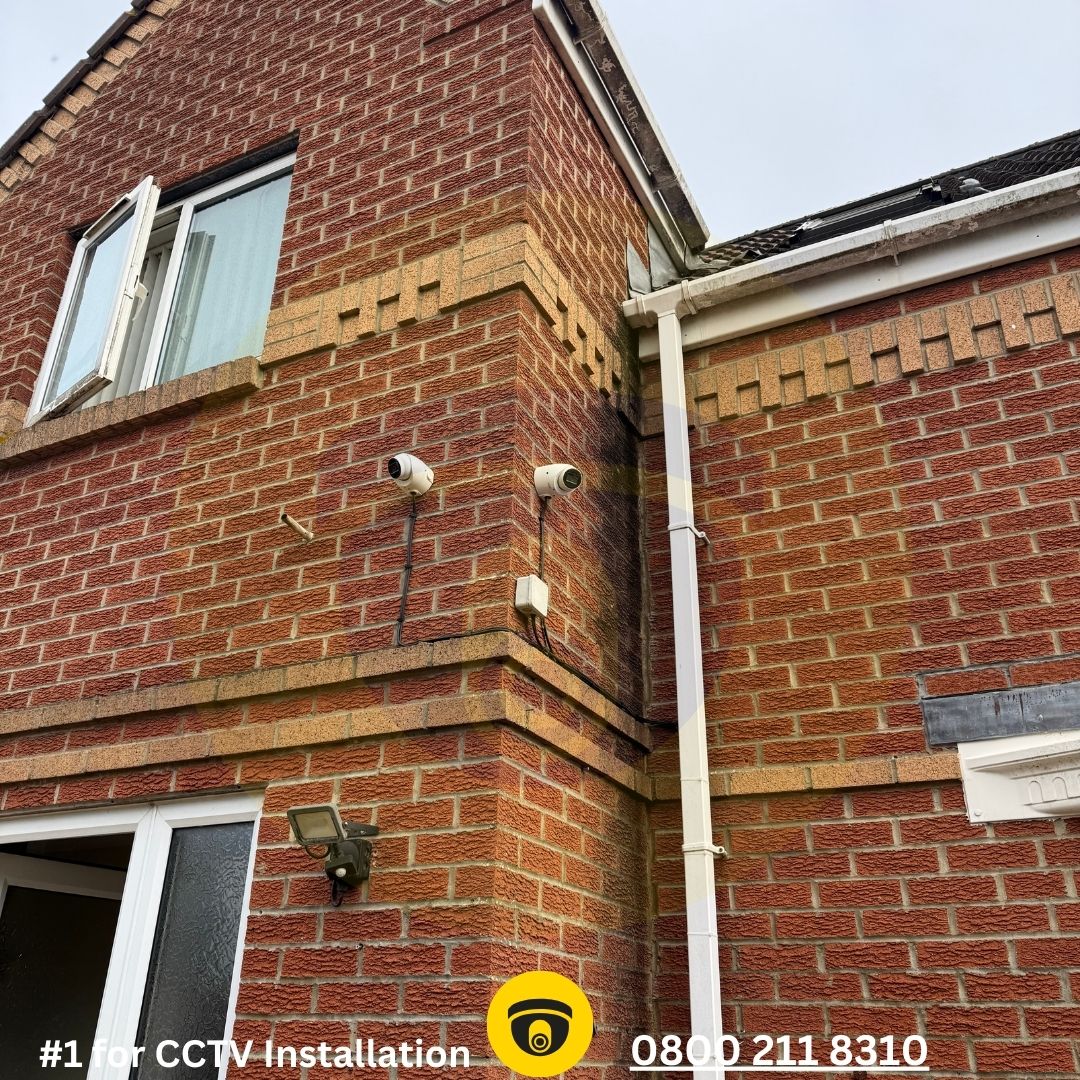
Whilst every property is unique, there are several locations that consistently provide the greatest security benefits.
Front Door
This remains one of the most important camera positions.
It records visitors, deliveries and anyone approaching your property.
Driveway
Vehicles are valuable assets.
A camera overlooking the driveway can help monitor both vehicles and anyone entering the property.
Rear Garden
Many burglaries occur through the rear of a property where activity is less visible from the road.
Rear garden coverage is often overlooked but can be one of the most valuable camera locations.
Side Access
Side gates frequently provide hidden access to gardens and rear doors.
Where possible, cameras should monitor these routes.
Garages and Outbuildings
If you store tools, bicycles or expensive equipment, additional coverage may be worthwhile.
Is More Always Better?
Not necessarily.
One well-positioned camera often provides more useful coverage than two poorly positioned ones.
Adding unnecessary cameras can create:
- Overlapping footage
- Increased storage requirements
- More maintenance
- Higher installation costs
Good CCTV design focuses on quality coverage rather than simply increasing camera numbers.
Why Professional CCTV Installation Matters
Choosing the right number of cameras is only part of the process.
Professional CCTV installation considers:
- Camera height
- Viewing angles
- Lighting conditions
- Night-time visibility
- Blind spots
- Future maintenance
Small adjustments in positioning can dramatically improve image quality and reduce vulnerable areas around your property.
An experienced installer will also consider factors that homeowners may not immediately notice, such as seasonal sunlight, reflections and landscaping that could obstruct views over time.
Final Thoughts
There isn’t a universal answer to how many CCTV cameras your home needs.
The right system depends on your property’s layout, your security priorities and the areas you want to protect.
For some homeowners, two carefully positioned cameras may provide excellent coverage. Others may benefit from a more comprehensive system that monitors multiple access points.
Ultimately, effective home CCTV isn’t about installing the most cameras—it’s about installing the right cameras in the right places.
Taking the time to plan your system properly will help ensure your investment provides reliable protection and valuable peace of mind for years to come.
