

Table of Contents
| Section | What You’ll Learn |
|---|---|
| What Actually Determines How Many Cameras You Need | Learn which factors determine the number of CCTV cameras a shop or office needs, including entry points, blind spots, high-risk areas, external spaces and privacy considerations. |
| Typical Considerations for a Shop | Understand the key areas shops typically need to monitor, including entrances, tills, aisles, stockrooms, delivery access and external areas. |
| Typical Considerations for an Office | Explore common CCTV priorities for offices, including entrances, reception areas, server rooms, car parks and staff privacy considerations. |
| Beyond Camera Count: What Else Affects a Commercial System | Discover how resolution, storage, remote monitoring, system integration and insurance requirements can influence a commercial CCTV setup. |
| Common Questions About Commercial CCTV Camera Numbers | Find answers to common questions about minimum camera numbers, whether more cameras provide better security, expanding a system and choosing cameras for shops and offices. |
| Why a Site Survey Beats Guessing | Learn why assessing blind spots, lighting, entry points and specific security risks provides a more accurate camera count than choosing a standard CCTV package. |
| Get a Tailored Recommendation | Find out how a site survey can help determine an accurate CCTV camera count and installation requirements for your shop or office. |
A two-till convenience shop and an open-plan office with a car park do not have the same risk profile, the same layout, or the same blind spots, so a generic answer will always be wrong for someone.
This guide covers the factors that actually determine camera count for shops and offices.
What Actually Determines How Many Cameras You Need
Before any number gets attached to a quote, a few things need to be worked out:
- Staff and customer privacy. Areas like staff rest rooms and toilets are generally excluded from coverage, and open-plan office areas need thought given to what is proportionate to record under GDPR.
- Entry and exit points. Every door customers, staff, or deliveries use is a point that needs coverage.
- Layout and blind spots. Aisles, corners, stairwells, and storage areas can all hide activity from a camera positioned elsewhere.
- High-risk areas. Till points, safes, stockrooms, server or comms rooms, and loading bays typically need dedicated coverage rather than relying on a wide-angle view from across the room.
- External perimeter. Car parks, delivery yards, and building exteriors matter for both crime prevention and staff safety, particularly outside daylight hours.
Typical Considerations for a Shop
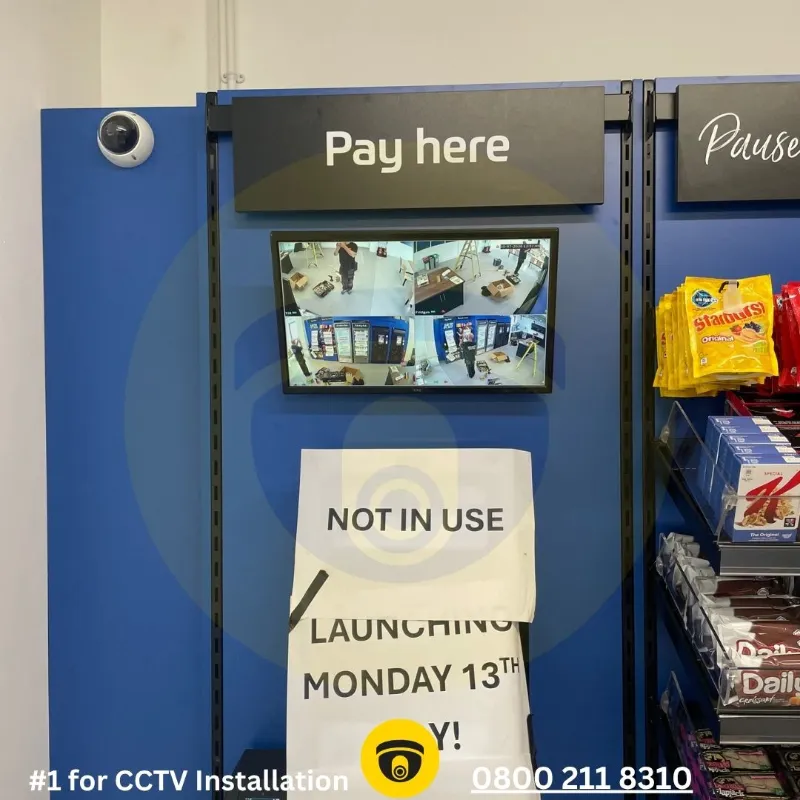
A small retail unit typically needs coverage of the entrance, the till or point-of-sale area, main aisles, and any back-of-house exit used for deliveries or stock. Larger shops or those with higher-value stock often add coverage of stockrooms and fitting rooms (positioned to avoid capturing anyone changing), plus external cameras covering the shopfront and any rear access.
Retail environments also tend to benefit from a camera angled to capture faces at the till, since this is the area most useful for resolving disputes over transactions or theft.
Typical Considerations for an Office
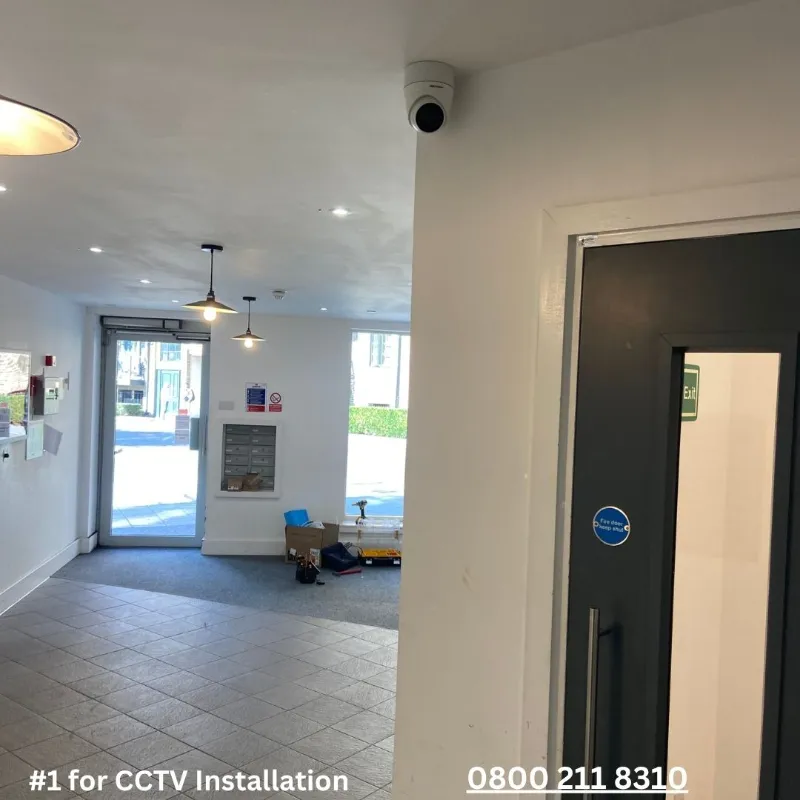
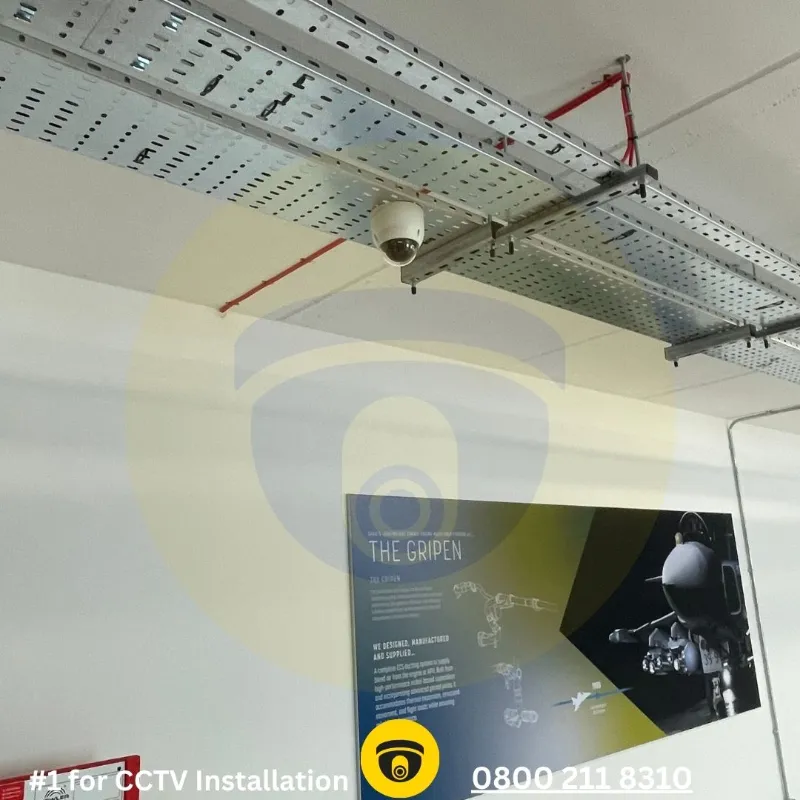
Offices generally need less internal coverage than shops, since the main risk is usually around access rather than open floor space. Common priorities are the main entrance and reception, any secondary or fire exit used outside standard hours, server or comms rooms (which often need dedicated coverage for both security and compliance reasons), car parks, and loading or delivery areas.
Open-plan desk areas are usually left uncovered or covered only at a wide, non-identifying angle, reflecting both lower risk and staff privacy expectations. Any decision to monitor internal work areas more closely should involve consulting staff and considering the ICO’s guidance on workplace monitoring.
Beyond Camera Count: What Else Affects a Commercial System
The number of cameras is only part of the picture. A few other factors shape what a business actually ends up with:
- Resolution and image quality, particularly at entrances and till points where identifying detail matters most
- Storage and retention, agreed with your installer in line with GDPR’s data minimisation principle rather than kept indefinitely
- Remote monitoring, allowing managers to check multiple sites or out-of-hours activity from a phone or laptop
- Integration with access control or alarm systems, useful for multi-site or higher-risk businesses
- Insurance requirements. Many insurers require professional installation for CCTV-related claims to be valid, which is worth checking against your own policy before committing to a DIY setup
Common Questions About Commercial CCTV Camera Numbers
Is there a minimum number of cameras a business has to install?
No. UK law does not set a minimum camera count, and there is no official industry guideline number either. The right figure comes from working through entry points, layout, and risk areas for your specific premises, not from a fixed target that applies to every shop or office.
Does more cameras always mean better security?
Not necessarily. A system with too many overlapping cameras and no clear plan for who monitors the footage can end up harder to manage than a smaller, well-placed one. Covering the right areas properly matters more than maximising the total count, and a cluttered system can make it harder to spot genuine incidents among the noise.
Can a business start small and add cameras later?
Yes. Most commercial CCTV systems are designed to be expandable, so a phased approach, covering entrances and the highest-risk areas first and adding further cameras as the business grows or its risk profile changes, is a common and sensible route rather than trying to future-proof everything on day one.
Do shops and offices need different types of cameras?
Often, yes. Retail environments tend to prioritise wide-angle coverage of till areas and aisles alongside a focused camera for identifying faces at the point of sale, while offices more often prioritise access points, car parks, and secure rooms such as server or comms cupboards. A professional installer will recommend camera types and lenses to match, rather than fitting the same specification everywhere.
Why a Site Survey Beats Guessing
The honest answer to “how many cameras do I need” is: it depends, and a proper site survey is how you find out rather than guess. cctv.co.uk‘s engineers assess blind spots, lighting conditions, entry points, and the specific risk areas of your shop or office before recommending a camera count and layout, rather than fitting a fixed package regardless of the building.
Every installation is carried out by fully insured, manufacturer-trained engineers, and every quote comes from an actual assessment of your premises rather than a one-size-fits-all price list.
Get a Tailored Recommendation
A no-obligation site survey is the fastest way to get an accurate camera count and quote for your shop or office
